We remain fully operational. Our teams are working around the clock to ensure your deliveries continue safely.

DOWNLOAD THE APP


Copyright © 2025 Desertcart Holdings Limited
DOWNLOAD THE APP


Buy anything from 5,000+ international stores. One checkout price. No surprise fees. Join 2M+ shoppers on Desertcart.
Desertcart purchases this item on your behalf and handles shipping, customs, and support to Bahamas.
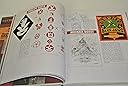
Logo Font & Lettering Bible: A Comprehensive Guide to the Design, Construction and Usage of Alphabets and Symbols [Cabarga, Leslie] on desertcart.com. *FREE* shipping on qualifying offers. Logo Font & Lettering Bible: A Comprehensive Guide to the Design, Construction and Usage of Alphabets and Symbols Review: Candy store for creative minds (recommended) - Yummy! With humor, clear illustrations, and useful suggestions, Cabarga provides a wonderful resource for anyone who wants to be a letterer, illustrator, font or logo designer. But this hardbound book is not just for "wanabes." I found it includes comprehensive coverage of most everything learned throughout 30 years in the same disciplines along with new valuable timesaving tips. If I had the patience and tenacity to attempt such a compilation, it could be no more complete and not nearly as well presented as LOGO FONT & LETTERING BIBLE. My essay can now be reduced to three words: "What he says." Leslie Cabarga, a talented illustrator and designer in his own right, does not limit examples to his own. World-renowned artists such as Gerard Huerta, Michael Doret, Tim Nikosey, Tony DiSpigna, and Seymour Chwast -- four dozen in all -- contribute to the wealth of inspiration. In the 1980's I had the privilege of working with uncles for one of these typography leaders -- producing over 200 hand-lettered packaging logos. It was there that I first saw an original triple outline inking of flourished letters by Gerard Huerta and was privileged to study a fraction of the techniques used. Cabarga urges readers to become critics of their own work. This also reminds me of employment at the Huertas. A bulge could occur when joining curves using technical pens. After working on it for a while and thinking to myself "It's good enough," this infinitesimal area would be the first thing the creative director would point out. After admitting that I saw it too, he remarked, "If you saw it, why show it to me?" I quickly learned to be obsessively concerned about adjoining curves. Ink bulges may not be a problem today with digital lettering but there are other telltale signs of an amateur. Cabarga shows what to look for. Your eyes are in for a tasty treat. Beautiful examples of calligraphy, and their influence on Roman font characters, are well demonstrated and discussed. But the book is by no means limited to calligraphy. Cabarga patiently differentiates cartooning, illustration, logo design, icon artwork, trademarks, and font design. LOGO FONT & LETTERING BIBLE compares digital tools such as the now defunct Macromedia FreeHand (my past favorite), Adobe Illustrator (which has supplanted the former), the seemingly forgotten Mac OS 9 version of Macromedia Fontographer (which in 2005 was integrated into the FontLab line of digital typography tools and updated to Mac OS X -- hooray!), and the preeminent FontLab. LOGO FONT & LETTERING BIBLE covers the history of typography and encourages users to build a library of signage photos and magazine scraps for inspiration. Each subject I thought might be overlooked was eventually covered. Even esoteric techniques such as what I refer to as character ink reservoirs (called clog reduction on page 115) are here. Skeleton Strokes on page 152 demonstrates wonderful timesaving suggestions for digital lettering. Optical character spacing and stroke widths are discussed in detail beginning on page 112. Do you want to learn how to clean up the best scans for converting drawings to vector art? Jump over to page 158. Everything you want to know about Bezier (pronounced "Bez-zee-ay," thank you) curves but were afraid to ask is, well, practically everywhere but particularly in the section Bezier Curves for Cowards that begins on page 140. Mississippi readers will approve. Just as I was thinking, the author needs to demonstrate how to arch text on a path (FreeHand did a better job than Illustrator), I turned to page 191 and, bam! There it is. The comparison on page 226 of residual shape differences in Illustrator and Fontographer after Bezier points are removed from a path is insightful. Not to leave you hanging, the book concludes with suggestions for getting work, building a portfolio, and negotiating fees. Additional resources and a helpful index rounds out 240 pages, which, like all trips to a candy store, seem to end too soon. Review: An education in a book - This is a really comprehensive overview of lettering and design. Every page is crammed with useful or interesting content. Reading it feels like sitting down with an experienced designer who draws examples for you, tells anecdotes about the subject, and leaves you realizing you've learned more than you ever expected without even noticing. The author analyzes designs of the past and present, explains the principles that define whether or not they work, and teaches you how to do it yourself. I can't recommend this book highly enough, especially for students and the self-taught. Is the author's style idiosyncratic? Sure, and that's one of the things that makes this book so great. I have a shelf full of dry, flat, tasteless design books; this is a banquet for the eyes and the mind. It's a book you can read for pleasure (at least, if you're the kind of person to whom learning about design is pleasurable) instead of just trudging through it for instruction. It's not so much about HOW to do things (although there are excellent tutorial sections) as on WHY to do them, or not do them -- the latter of which is desperately needed today. And for the individual who complained that the tutorals are specific to certain software: if you can't look at an explanation of how to draw a curve in Illustrator, for example, and just use the corresponding tools in whatever graphics software you have, this field just isn't for you. I only rated this book at 5 stars because desertcart wouldn't let me tape a sixth one on to the end. If you have any interest, even casually, in lettering, in logo design, or in typography, this book is a must.
| Best Sellers Rank | #2,113,032 in Books ( See Top 100 in Books ) #226 in Branding & Logo Design #551 in Typography (Books) #19,434 in Home Improvement & Design Books |
| Customer Reviews | 4.5 4.5 out of 5 stars (114) |
| Dimensions | 8.75 x 0.75 x 10.75 inches |
| Edition | First Edition |
| ISBN-10 | 1581804369 |
| ISBN-13 | 978-1581804362 |
| Item Weight | 2.7 pounds |
| Language | English |
| Print length | 240 pages |
| Publication date | March 1, 2004 |
| Publisher | How Design Books |
K**L
Candy store for creative minds (recommended)
Yummy! With humor, clear illustrations, and useful suggestions, Cabarga provides a wonderful resource for anyone who wants to be a letterer, illustrator, font or logo designer. But this hardbound book is not just for "wanabes." I found it includes comprehensive coverage of most everything learned throughout 30 years in the same disciplines along with new valuable timesaving tips. If I had the patience and tenacity to attempt such a compilation, it could be no more complete and not nearly as well presented as LOGO FONT & LETTERING BIBLE. My essay can now be reduced to three words: "What he says." Leslie Cabarga, a talented illustrator and designer in his own right, does not limit examples to his own. World-renowned artists such as Gerard Huerta, Michael Doret, Tim Nikosey, Tony DiSpigna, and Seymour Chwast -- four dozen in all -- contribute to the wealth of inspiration. In the 1980's I had the privilege of working with uncles for one of these typography leaders -- producing over 200 hand-lettered packaging logos. It was there that I first saw an original triple outline inking of flourished letters by Gerard Huerta and was privileged to study a fraction of the techniques used. Cabarga urges readers to become critics of their own work. This also reminds me of employment at the Huertas. A bulge could occur when joining curves using technical pens. After working on it for a while and thinking to myself "It's good enough," this infinitesimal area would be the first thing the creative director would point out. After admitting that I saw it too, he remarked, "If you saw it, why show it to me?" I quickly learned to be obsessively concerned about adjoining curves. Ink bulges may not be a problem today with digital lettering but there are other telltale signs of an amateur. Cabarga shows what to look for. Your eyes are in for a tasty treat. Beautiful examples of calligraphy, and their influence on Roman font characters, are well demonstrated and discussed. But the book is by no means limited to calligraphy. Cabarga patiently differentiates cartooning, illustration, logo design, icon artwork, trademarks, and font design. LOGO FONT & LETTERING BIBLE compares digital tools such as the now defunct Macromedia FreeHand (my past favorite), Adobe Illustrator (which has supplanted the former), the seemingly forgotten Mac OS 9 version of Macromedia Fontographer (which in 2005 was integrated into the FontLab line of digital typography tools and updated to Mac OS X -- hooray!), and the preeminent FontLab. LOGO FONT & LETTERING BIBLE covers the history of typography and encourages users to build a library of signage photos and magazine scraps for inspiration. Each subject I thought might be overlooked was eventually covered. Even esoteric techniques such as what I refer to as character ink reservoirs (called clog reduction on page 115) are here. Skeleton Strokes on page 152 demonstrates wonderful timesaving suggestions for digital lettering. Optical character spacing and stroke widths are discussed in detail beginning on page 112. Do you want to learn how to clean up the best scans for converting drawings to vector art? Jump over to page 158. Everything you want to know about Bezier (pronounced "Bez-zee-ay," thank you) curves but were afraid to ask is, well, practically everywhere but particularly in the section Bezier Curves for Cowards that begins on page 140. Mississippi readers will approve. Just as I was thinking, the author needs to demonstrate how to arch text on a path (FreeHand did a better job than Illustrator), I turned to page 191 and, bam! There it is. The comparison on page 226 of residual shape differences in Illustrator and Fontographer after Bezier points are removed from a path is insightful. Not to leave you hanging, the book concludes with suggestions for getting work, building a portfolio, and negotiating fees. Additional resources and a helpful index rounds out 240 pages, which, like all trips to a candy store, seem to end too soon.
J**E
An education in a book
This is a really comprehensive overview of lettering and design. Every page is crammed with useful or interesting content. Reading it feels like sitting down with an experienced designer who draws examples for you, tells anecdotes about the subject, and leaves you realizing you've learned more than you ever expected without even noticing. The author analyzes designs of the past and present, explains the principles that define whether or not they work, and teaches you how to do it yourself. I can't recommend this book highly enough, especially for students and the self-taught. Is the author's style idiosyncratic? Sure, and that's one of the things that makes this book so great. I have a shelf full of dry, flat, tasteless design books; this is a banquet for the eyes and the mind. It's a book you can read for pleasure (at least, if you're the kind of person to whom learning about design is pleasurable) instead of just trudging through it for instruction. It's not so much about HOW to do things (although there are excellent tutorial sections) as on WHY to do them, or not do them -- the latter of which is desperately needed today. And for the individual who complained that the tutorals are specific to certain software: if you can't look at an explanation of how to draw a curve in Illustrator, for example, and just use the corresponding tools in whatever graphics software you have, this field just isn't for you. I only rated this book at 5 stars because Amazon wouldn't let me tape a sixth one on to the end. If you have any interest, even casually, in lettering, in logo design, or in typography, this book is a must.
L**Y
Not for Beginners
This is definately a book for the advanced in this field. I had hoped to have more logo examples to give me ideas, but it leaned more heavily towards lettering. I don't feel qualified to rate this book since it is for a level of expertise far more advanced than mine and my review would not be valuable.
M**D
Cabarga puts a little excitement into letterform design!
Typography doesn't have to be a dull subject. Finally, here is a book that proves that it isn't, it isn't at all. From the fine writer of two must-have color books [The Designer's Guide to Color Combinations and Designer's Guide to Global Color Combinations], Leslie Cabarga's "Logo, Font & Lettering Bible" is likely the best book out there on letterform design and use. Cabarga engages the reader with his fun, witty, easy-to-read writing style, uses rich visual detail [and superb layout] to explain what you need to know about creating and using type in design. If you are a new, or even an advanced user of Illustrator, he offers great instructions, insight and step-by-step drawings about using the program to change the look and feel of your fonts. This also may be the first book of its kind to go into such detail on using Fontographer to create new typefaces. This is a fine book that can be both read for pleasure [yes, I said pleasure] and used as a guide in developing and polishing type and logo building skills. I believe a book like this will get a lot of use. It's a good one!
B**D
An excellent resource for designers. Clear;y written and full of well done illustrations, it belongs in the library of designers, typographers, & everyone who loves typography!
J**.
A great book and fab source of typography
F**.
Il Logo, Font and Lettering Bible è un libro straordinario per chi si occupa di design grafico o vuole approfondire la creazione di loghi e caratteri tipografici. È ricco di esempi pratici, consigli tecnici e ispirazioni, con un approccio chiaro e accessibile anche ai principianti. Lo uso spesso come riferimento per i miei progetti e trovo sempre nuove idee. L'unico aspetto negativo è che, essendo molto dettagliato, potrebbe sembrare un po' denso per chi cerca una lettura veloce. Nel complesso, è un must-have per designer e appassionati di tipografia.
T**T
This is one book that is useless on a Kindle. Don't publishers think about these things? For the same money buy the book!
T**R
Lo consiglio. Per chi si occupa di grafica risulta un opera davvero ricca e realizzata da un esperto del settore. E' decisamente più di un buon manuale sull'argomento.
Trustpilot
5 days ago
2 months ago